Found in Zeist: Trump Acorn
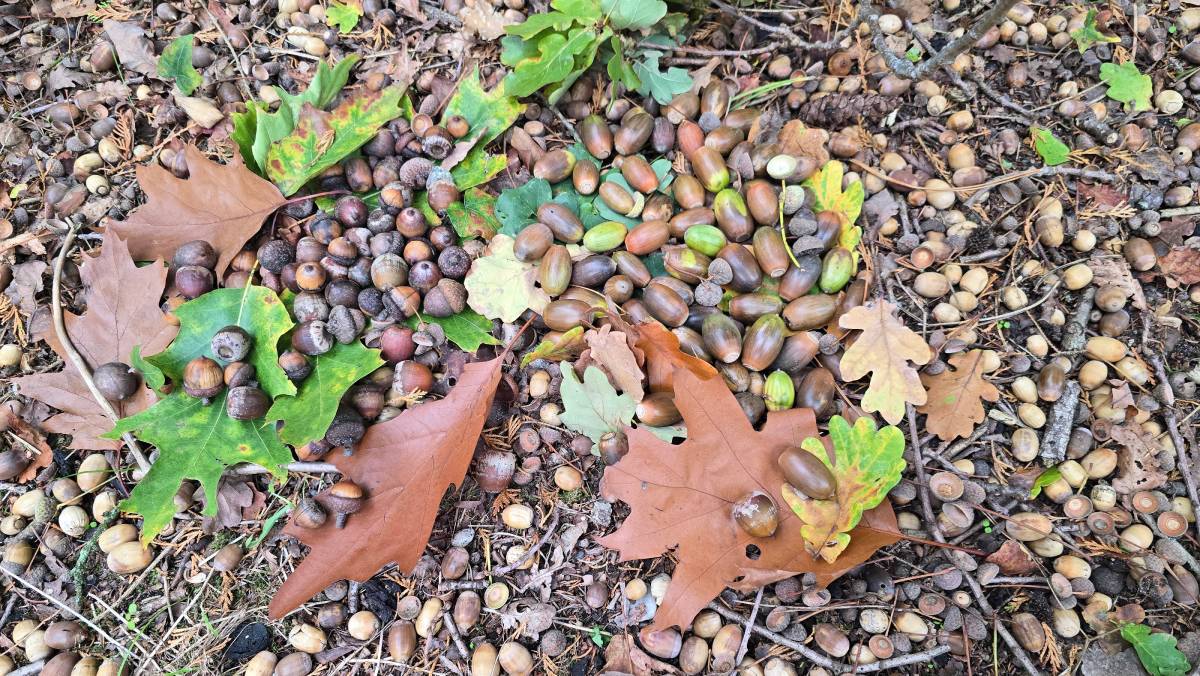
Autumn has arrived, and this year I'm particularly struck by the fact that the forest paths, as well as the sidewalks and bike trails, are littered with acorns and leaves. With Siena and Giulia on my left hand, and a walking stick due to a hernia in my right, I set out on a hike to find a very special acorn hanging from a tree somewhere in Zeist. Elderly people with walkers, as well as cyclists, should be careful, as it's easy to fall. This abundance of acorns is thanks to the wonderful but extremely warm spring and summer of this year and last.
The energy-rich acorns are an important food source, particularly for squirrels, deer, mice, foxes, wild boar, and pigs. Acorns are considered nuts, but they are poisonous to humans, dogs, horses, sheep, and cattle due to tannins. These tannins can irritate the gastrointestinal tract. In the body they are converted into a strong blood poison that causes the breakdown of red blood cells.
A good food supply also influences the populations of predators, such as the wolf. Besides acorn tea, there's plenty of live food for them, and their population is growing steadily. There are currently at least ten of them in our area, and wolf Bram still hasn't been killed. The leash requirement for dogs has been lifted, but the advice is to avoid the woods as long as Bram is still alive. This way, the Utrecht Landscape and the State Forestry Service are protecting themselves against any damage claims.
The Oak (Quercus)
The oak is a deciduous tree genus and, with over 400 species, belongs to both the deciduous and evergreen groups. The wood is strong and hard, yet relatively easy to work and finish. The oak's survival depends primarily on the jay and the squirrel. An acorn doesn't fall far from the tree and can't grow under the canopy. Therefore, it relies on animals to move the acorn further away from the tree. Squirrels bury caches of acorns for the winter. If a squirrel dies, doesn't use the cache completely, or forgets about it, it's an ideal place for the acorns to germinate.
The taproot that supports the oak can reach up to 40 meters in length and grows as deep as the tree is tall. From this taproot, to a depth of 4 meters, grows the horizontal, supporting, fine root system, which can reach a width of up to 27 meters. Roughly speaking, this is as wide as the crown of the tree (the portion above the branchless trunk). Oaks can easily live for two hundred years, but they can also live for 500 to 900 years.
Oak Shrine
Originally, oaks were used as tree shrines by pre-Christian inhabitants of Western Europe. The predecessor of the nearly 775-year-old "Holy Oak of the Wood" near Oosterhout served as a tree shrine. The Christian missionary Boniface, commissioned to convert the Frisians to Christianity, was killed by them near Dokkum because he ordered their oak shrines destroyed. The word "oak" is related to the Indo-European word "igja," meaning veneration. The word "druid" (priest) is related to the Celtic word for oak, and the Drunemeton ("oak shrine") was the gathering place.
Oak Species and Their Leaves
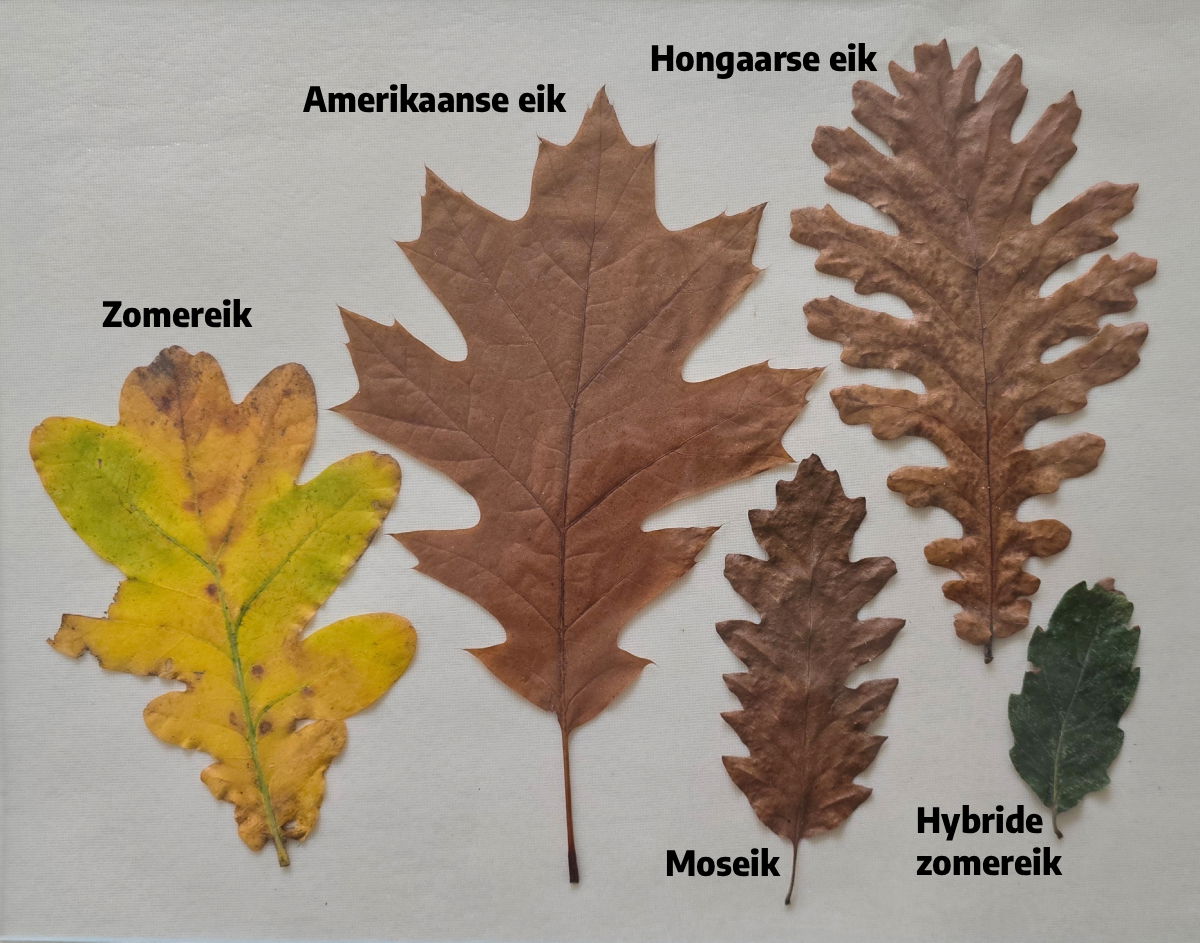
There are over 400 oak species in total, both evergreen and deciduous. The most common oak species in the Netherlands are the common oak and the northern red oak. Our municipality boasts over 35,000 trees, including five monumental oaks.
• Turkey oak (Quercus Cerris), planted in 1850 at Wulperhorst Estate
• Northern red oak (Quercus Rubra), planted in 1860 at Villa Pavia
• Pedunculate oak (Querus Robur), planted in 1900 at Wulperhorst Estate
• Hungarian oak (Quercus Frainetto), planted in 1900 at Zusterplein
• Hybrid common oak (Quercus x Turneri), planted in 1914 at Jacob van Lennepplein
In search of the special acorn
I drive to "Buitenplaats Wulperhorst" where, while walking with my Italian hunting dogs, Siena and Giulia, I search for that special acorn. My eye falls on a huge English oak that stands to the right in the woods next to the driveway. What would this magnificent tree, planted in 1900, with its height of over 38 meters and a trunk circumference of 3.6 meters, tell me about the history of Zeist if it could talk? This monumental tree is apparently the tallest oak in Zeist. However, there is also an older Turkey oak here, planted around 1850. This one, with its trunk circumference of over 4.5 meters and height of (only) 28 meters, looks even more impressive. I see it standing to the left, behind the house. The tree consists of two main branches, of which, unfortunately, the right main branch has broken off. Apparently I came to have a look just in time because this fatso is in very poor condition and has seen its longest time in its 175 years of existence.
Majestic American Oak
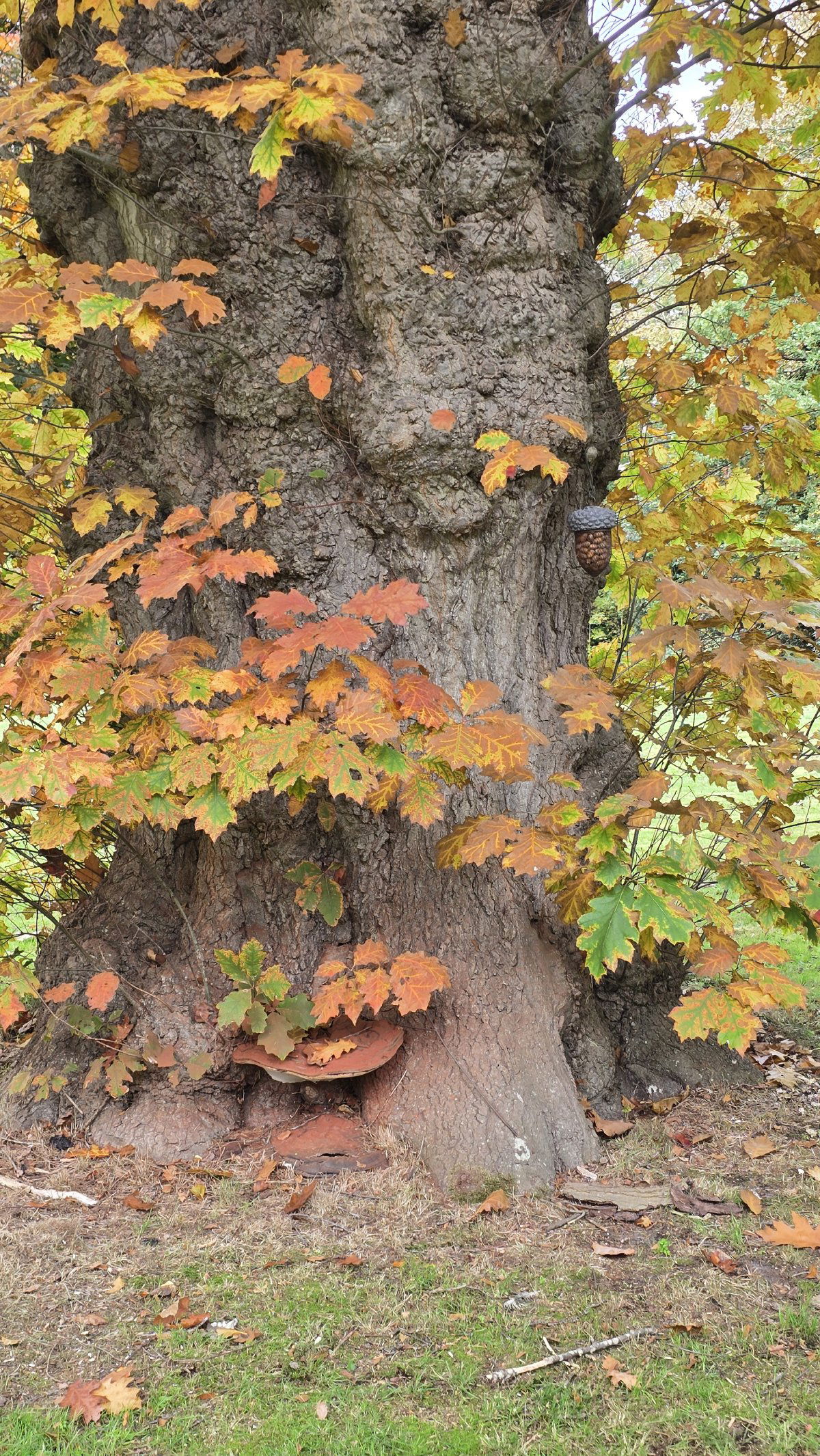
We have to go because I can't find the special acorn here, and on the way home, I want to see that enormous American oak at "Buitenplaats Pavia." This majestic, over 165-year-old giant with its bulbous acorns stands at the back of the garden near the water. It has a bumpy trunk circumference of over 4.22 meters and a height of over 20 meters. As I get closer to the tree, I see a huge acorn hanging halfway up the trunk to the right. The insulting saying "you don't have to hang from a tree to be an acorn" immediately comes to mind. In this currently unstable world, I can't help but think of its cause: US President Donald Trump. What a mess this man has caused in such a short time. This must be the "Trump Acorn," because this acorn resembles the self-satisfied, bloated, chubby, orange-faced gentleman with all his annoying and irritating ways. His way of speaking, with his head slightly tilted, that little mouth and finger, the handshakes, the dismissal of his dependents, like President Zelensky, but also of Democrats, opponents, or dissidents. Removing them from office because they disagree with his policies. His constant reneging on promises and commitments, his wavering policies. Building his own sanctuary or kingdom and leaving the world in chaos. Wanting to sleep in palaces with kings and queens. He feels like a king but behaves like a spoiled child. All this makes the hairs on the back of my neck stand on end just hearing and especially seeing this man. Yes, the saying "you don't have to hang from a tree to be an idiot" is very applicable to him. But even this old giant is at the end of his career, as evidenced by the "Thick-Rand Tinder Fungus" that has begun to eat the legs under his fat body. Is this a coincidence?
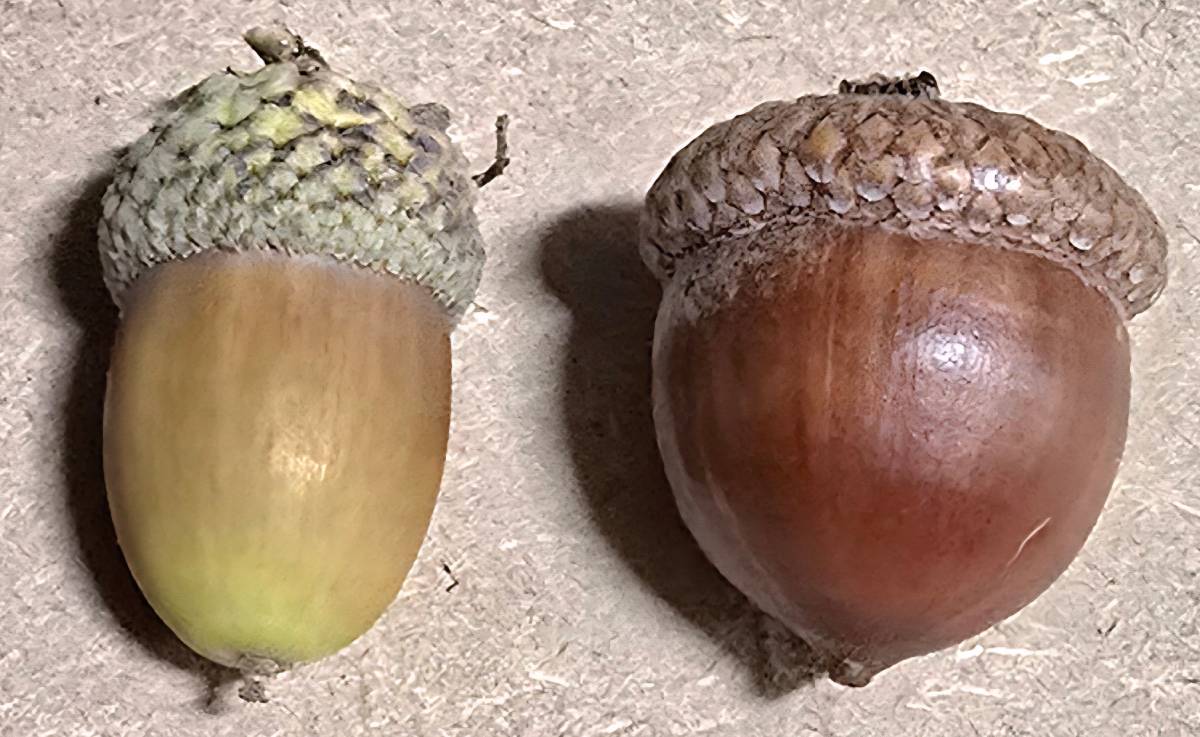
The European oak tree is producing approximately 4.7 million kilos of those beautiful, slender acorns this year, which is much more than the average of 3.1 million kilos in other years. The American oak, however, is producing noticeably few round acorns this year, and it seems to be following the trend of that unpopular "Trump" in our country.
Zeist is so beautiful, and we're so lucky to live here.
Arnie Della Rosa
Want to comment on a story? Please include your name and email address with your comment so I can respond if necessary. Don't want to miss anything and receive an automatic notification when a new story is published? Send an email to avanr1956@gmail.com and I'll add you to the mailinglist.
You can read my walking stories on https://www.als-bomen-en-stenen-konden-praten.com